

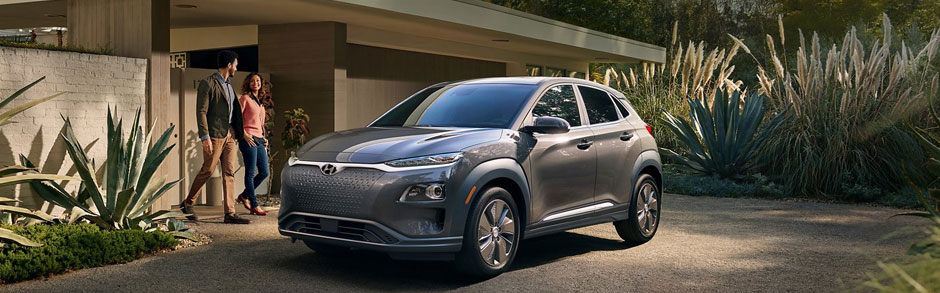
2026 Hyundai Electrified Quick Guide
- Current 2026 Lineup: Elantra Hybrid, Sonata Hybrid, Tucson Hybrid, Tucson Plug-in Hybrid, Santa Fe Hybrid, Palisade Hybrid, IONIQ 5, and IONIQ 9.
- Max Zero-Emission Range: The 2026 Hyundai IONIQ 9 offers up to an estimated 334 miles of all-electric range on a full charge.**
- Towing: The 2026 Hyundai IONIQ 9 is certified to tow up to 5,000 lbs when properly configured.**
- Fuel Savings: Switching from a traditional Hyundai ICE (Internal Combustion Engine) to an EV can save you 54%-62% annually on fuel costs.*
1) I know EV means "Electric Vehicle," but what do PHEV, HEV, BEV, ZEV, and ICE mean?
Understanding the terminology is the first step in going electric. Here is a breakdown of common acronyms:
- PHEV (Plug-in Hybrid Electric Vehicle): PHEVs cater to individuals seeking to transition away from traditional gas- and diesel-powered cars but who may not be ready to embrace a fully electric option.
- HEV (Hybrid Electric Vehicle): Hybrids feature both a gas engine and an electric battery, but they do not require plugging in to charge. HEV drivers often hear the gas engine running while the battery recharges seamlessly through regenerative braking. When the brake pedal is pressed, the electric motor reverses to function as a generator, charging the battery. If you are wondering what type of EV battery is charged exclusively through regenerative braking and the ICE, an HEV is the exact answer.
- BEV (Battery Electric Vehicle): BEVs exclusively rely on battery power and operate as 100% electric vehicles.
- ZEV (Zero Emission Vehicle): Any vehicle that emits no harmful pollutants from its exhaust pipe is considered a ZEV. BEVs exemplify ZEVs by emitting no tailpipe emissions.
- ICE (Internal Combustion Engine): These are conventional, traditional gas-powered vehicles.
2) Are Hyundai electric vehicles more expensive than gas engine vehicles?
Typically, EVs require less overall maintenance and yield lower long-term fuel costs, effectively offsetting the initial purchase price. For example, electric vehicles do not require routine oil changes. Furthermore, data shows that EV drivers tend to spend 54%-62% less each year on fuel costs.*
3) How far can Hyundai electric and hybrid cars go?
Modern EV and hybrid models offer excellent fuel economy. Below are the official estimates for the current 2026 lineup:**
- 2026 Hyundai Elantra Hybrid: Up to an EPA-estimated 54 MPG combined (51 City/58 Hwy on Blue trim). Explore more via our 2026 Hyundai Elantra Hybrid review.
- 2026 Hyundai Sonata Hybrid: Up to an EPA-estimated 51 MPG combined (47 City/56 Hwy on Blue trim), delivering an extended driving range of up to 673 miles on a single tank. Explore more via our 2026 Hyundai Sonata Hybrid review.
- 2026 Hyundai Tucson Hybrid: Delivers exceptional real-world driving efficiency, netting an EPA-estimated 38 MPG combined. Explore more via our 2026 Hyundai Tucson Hybrid review.
- 2026 Hyundai Tucson Plug-in Hybrid: Features an all-electric driving range of up to an EPA-estimated 33 miles before utilizing its gas hybrid engine. Explore more via our 2026 Hyundai Tucson Plug-in Hybrid review.
- 2026 Hyundai Santa Fe Hybrid: Outfitted for long-distance family travel with up to an EPA-estimated 37 City/36 Highway MPG. Explore more via our 2026 Hyundai Santa Fe Hybrid review.
- 2026 Hyundai Palisade Hybrid: Introduces an advanced turbo-hybrid powertrain balancing robust multi-row capability with a massive 619-mile total driving range. Explore more via our 2026 Hyundai Palisade Hybrid review.
- 2026 Hyundai IONIQ 5: Delivers an outstanding all-electric EPA-estimated driving range of 245-318 miles per charge. Explore more via our 2026 Hyundai IONIQ 5 review.
- 2026 Hyundai IONIQ 9: Offers up to an estimated 334 miles (539 km) of zero-emission driving range on a full charge for maximum highway performance. Explore more via our 2026 Hyundai IONIQ 9 review.
4) How long does it take to charge an electric Hyundai vehicle?
There are several convenient ways to charge an EV. It can take 30-60 minutes with Level 3 DC fast charging or 8-20+ hours with a Level 1 standard home-charging setup.***
For more detailed guides on optimized charging infrastructure, view our verified manufacturer tutorials:
5) Where can Hyundai electric cars be charged?
EVs can be easily charged at home with an installed residential charging station, providing maximum overnight charging convenience. Public charging stations are also rapidly growing in number, appearing frequently at shopping centers, along major highways, workplaces, hotels, restaurants, grocery stores, and more. You can safely use specialized tools such as chargefinder.com to monitor live charging stations near you.
6) Can EV batteries be recycled?
Once your electric vehicle's battery components are dead (which likely won't happen for at least 10+ years), you can indeed successfully recycle it. While not every part of the battery assembly is fully recyclable today, emerging automated processes are expected to push EV battery recycling to upwards of 90%, minimizing environmental impacts as much as possible.
7) Can electric models tow?
Yes. Here are some EV models that can tow:**
- The 2026 Hyundai Tucson Hybrid is capable of towing up to 2,000 lbs when properly equipped with trailer brakes.
- The 2026 Hyundai Tucson Plug-in Hybrid is capable of towing up to 2,000 lbs when properly equipped with trailer brakes.
- The 2026 Hyundai Santa Fe Hybrid is capable of towing up to 2,000 lbs when properly equipped with trailer brakes.
- The 2026 Hyundai Palisade Hybrid is capable of towing up to 4,000 lbs when properly configured with integrated trailer brakes.
- The 2026 Hyundai IONIQ 5 is capable of towing up to 2,700 lbs when selecting the all-wheel drive XRT trim equipped with a factory hitch.
- The 2026 Hyundai IONIQ 9 is capable of towing up to 5,000 lbs when utilizing an advanced dual-motor all-wheel drive configuration.
(Note: The 2026 Hyundai Elantra Hybrid and 2026 Hyundai Sonata Hybrid are not rated for towing applications).
8) Are there government incentives for electric car buyers?
Tax incentives and EV policies are constantly evolving. To get the most accurate, up-to-date information for your region, we highly recommend contacting one of our showroom sales representatives about the model you are most interested in. Additional external resources and qualified model breakdowns can be found directly on the IRS's website.
9) Which Hyundai models are available in electric?
EVs are rapidly evolving with new models and cutting-edge features. To find our latest up-to-the-minute selection of available electric options, browse our real-time online EV inventory or contact us directly for more information.
* Source: recharged.com/articles/are-electric-cars-cheaper-than-gas-cars
** Vehicle stats listed are based on OEM specs for the 2026 model year and can vary based on trim, driving habits, weather conditions, and available upgrades.
*** Charging times may vary depending on factors such as model, battery size, ambient temperature, and current state of charge.
EV Blogs
You are viewing all posts for categories: Electric
